Cheap Bids, Costly Variations: Seven Warning Signs in a Demolition Tender

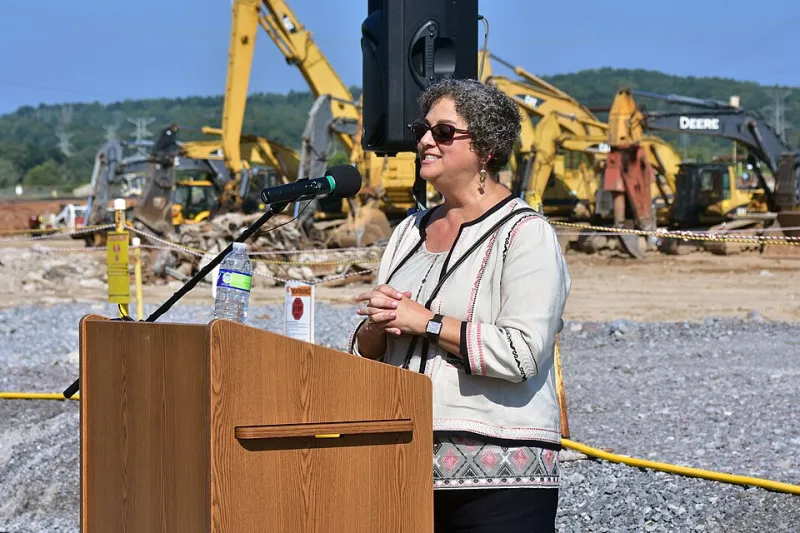
Photo: Stanley Howe, CC BY-SA 2.0, via Wikimedia Commons
Developers ask us a version of the same question most months: how has this bid come in twenty per cent below everyone else? Occasionally the answer is genuine — a contractor with a nearby site, spare capacity and a machine already mobilised. Far more often, the answer is that the price does not include the job.
That is not an accusation of dishonesty. It is a description of how low bids are constructed. Something has to be left out, and on a demolition project the things that get left out are usually the things nobody enjoys pricing: asbestos, waste, below-ground obstructions and the compliance burden that now sits around higher-risk buildings. Here are seven signs worth looking for before you award.
1. The asbestos line is a single figure with no survey behind it
A lump sum for asbestos with no refurbishment and demolition survey referenced is not an allowance. It is a placeholder. Ask which survey the figure is based on, who commissioned it, when it was carried out and whether it covered the areas the works will actually disturb. If the answer is that the contractor will deal with it when they get there, you have bought an uncapped variation rather than a price.
On a typical 1970s or 1980s building, the difference between a defensible allowance and a guess can run well into six figures once licensed removal, enclosure, air monitoring and waste consignment are added together.
2. Waste is somehow everybody's responsibility
The phrase to look for is along the lines of waste removal by others. It sounds tidy and means nothing. Establish explicitly who classifies the waste, who holds the carrier registration, which permitted facility each stream is going to, who pays the landfill tax and who carries the risk if the receiving site rejects a load.
Waste is where quiet savings hide and where quiet costs surface. A bid that treats muck away as a rounding exercise has either misunderstood the ground conditions or intends to revisit the subject later.
3. The programme assumes an empty building
Demolition programmes that assume unimpeded access to every elevation, no soft strip, no service diversions and no tenant liaison are not programmes. They are wishes. Check whether the sequence accounts for the building that is actually on the site, including the bits that will slow everything down: the plant room, the basement, the party wall agreement and the electricity supply that nobody can isolate on the day they planned to.
An unrealistic programme is expensive in a way that does not appear in the tender comparison. It appears in the extension of preliminaries, the standing time for following trades and the loss of a crane or piling slot booked months in advance.
4. Everything below the slab is outside the price
Foundations, pile caps, redundant drainage, fuel tanks, buried obstructions and contamination are the classic exclusions. Sometimes the exclusion is legitimate and clearly stated. Often it is buried in a qualifications schedule on page forty-one.
Before comparing bids, ask each contractor to state, in one place, what happens to the price when the excavator finds something. Look for a mechanism: a defined rate, a measured basis, a decision point. A bid with no mechanism is a bid that will negotiate from a position of strength once you are already on site.
5. Preliminaries are priced for a domestic extension
A demolition site needs a site manager, a supervisor, welfare, fencing, signage, dust suppression, wheel washing, security, temporary services and a considerable amount of time spent on coordination. If the preliminaries are thin to the point of implausibility, either the contractor intends to run the job with nobody on it, or the preliminaries will be topped up through variations once the site is live.
Compare preliminaries as a percentage of the total across the bids. Wide divergence is a question, not necessarily a problem — but it needs an answer.
6. The compliance burden has quietly disappeared
In 2026, demolition on a higher-risk building carries a real administrative and supervisory load: duty-holder appointments, competence evidence, information management, fire safety planning for the works and engagement with the Building Safety Regulator where the building is in scope. Somebody has to be paid to do that work.
A tender that contains no line for it, and no named person responsible for it, is a tender that expects the client to carry it. That is a substantive transfer of risk dressed up as a competitive price.
7. The variation schedule is the real price list
Turn to the back of the document. Look at dayworks rates, plant rates, additional supervision rates and the notice periods attached to them. Look at whether there is any reciprocal obligation on the contractor, or whether every adjustment runs in one direction only.
A contractor who has priced keenly and then set punitive variation rates has simply moved the commercial conversation to the point where you have least leverage. The tender comparison you ran in March will bear no resemblance to the final account you settle in December.
What the saving tends to cost
| Apparent saving at tender | Likely later cost |
|---|---|
| Asbestos allowance stripped out | Licensed removal, enclosure and delays at the worst possible moment |
| Waste left with the client | Classification disputes, rejected loads, unplanned landfill tax |
| Optimistic programme | Extended preliminaries, standing time, lost follow-on bookings |
| Below-ground exclusions | Dayworks or renegotiation once the site is open |
| Thin preliminaries | Under-resourced site, slower progress, safety exposure |
| Compliance omitted | Client absorbing duty-holder work it did not plan for |
| Aggressive variation rates | Final account drifting well beyond the tender figure |
How to test a bid before you award
The most useful step is also the simplest: issue a qualifications schedule with the tender and require every bidder to complete it in the same format. Ask each one to state their asbestos basis, their waste routes, their below-ground assumptions, their programme logic and their variation mechanism. Then compare like with like.
Second, visit a live site with each shortlisted contractor. Not the head office, and not a completed project with a marketing board outside it. A working site tells you how a contractor actually operates, how their supervisor speaks to the workforce and whether the paperwork you were shown in the tender bears any relation to what happens at the coal face.
Third, ask what they would do differently if they were the client. A contractor who can articulate the risks you are carrying has usually priced them. A contractor who cannot see any risk at all has either not looked or not cared.
The cheapest bid is not the one with the smallest number. It is the one whose final account lands closest to the number you were quoted, on a programme that held, with no letters arriving from a regulator. On a demolition project, that is worth paying for.