Before the Chillers Go: Evidencing F-Gas Recovery in Demolition Scopes

Photo by Photo by Rodrigo Kambara on Unsplash on Unsplash
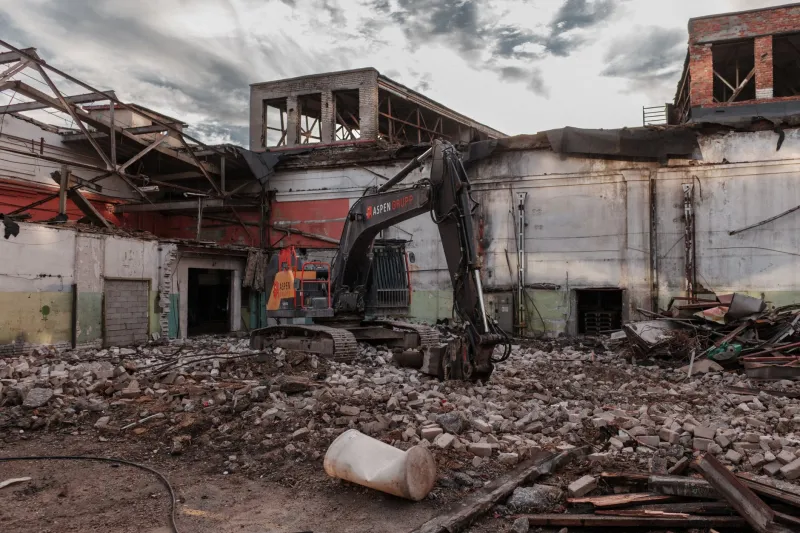
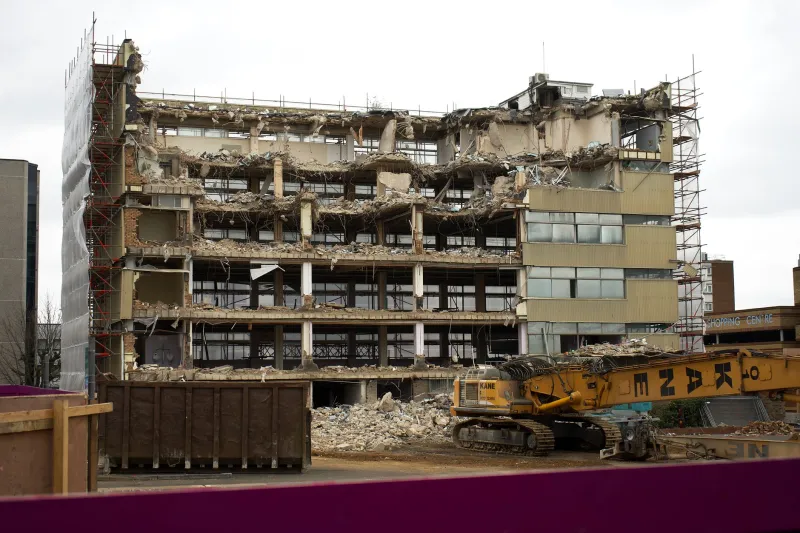
Soft-strip packages tend to be examined through two familiar lenses: asbestos management and waste duty of care. Both are essential, but neither captures the refrigerant charge sitting in a rooftop chiller, a basement cold store or a ceiling cassette. Under the UK F-Gas regime, fluorinated greenhouse gases must be recovered by certified personnel before the equipment containing them is dismantled. If that activity is not named in the demolition scope, it is often left as an unpriced afterthought at the point when the strip-out team is already on site.
Why refrigerants sit outside the standard strip-out scope
Demolition contractors are experienced at taking buildings apart, but refrigerant recovery is a specialist regulated task. The equipment may look like ordinary plant, yet the gas inside it is not ordinary waste. Stationary refrigeration, air-conditioning and heat-pump equipment can contain fluorinated gases with high global warming potential. Releasing them to atmosphere is not a acceptable method of decommissioning, and the paperwork trail matters as much as the physical recovery.
The developer's exposure begins before the tender returns. If the pre-demolition audit records only asbestos, hazardous substances and general waste streams, the refrigerant charge may never be priced. A principal contractor may then treat the chiller as part of mechanical and electrical removal, assuming the demolition contractor will deal with it. The demolition contractor may in turn assume the mechanical sub-contractor has already purged the system. That gap is where delay, contractual dispute and environmental risk accumulate.
The equipment audit that should precede the tender
The practical starting point is an asset schedule of cooling equipment. It should identify chillers, cold rooms, comfort-cooling units, heat pumps, ceiling cassettes, server-room cooling, vending equipment and any temporary plant left by tenants. For each item, the schedule should record location, access constraints, nameplate details, refrigerant type and charge where known, and whether the unit is connected to pipework or remote condensing equipment.
O&M manuals, maintenance contracts, F-Gas records and service labels can fill gaps. Where the refrigerant type or charge is unknown, the tender should say so rather than assume a nominal figure. Unknown charges are not a reason to omit the item; they are a reason to make the risk explicit. A modest split unit in a suspended ceiling can carry a refrigerant charge that still requires controlled recovery. Small equipment should not fall outside the audit simply because it is easy to overlook.
Who provides the evidence?
The client remains responsible for ensuring the work is done properly, even where a contractor coordinates it. The recovery should be carried out by a business and personnel certified under the F-Gas regime, with records showing what was recovered, from which equipment, and where it went. The handover pack should be more than a one-line invoice.
Developers should expect a record of the equipment surveyed, photographs of nameplates, cylinder identification, the quantity and type of refrigerant recovered, and a waste transfer or consignment note for the recovered gas. A statement confirming that recovery took place before dismantling is also useful, particularly where the demolition contractor and the refrigeration contractor are different parties. These records should sit alongside the asbestos clearance and waste documentation, not in a separate file that nobody checks at practical completion.
Sequencing recovery without delaying strip-out
Refrigerant recovery needs to be sequenced with care. Some systems require power to run pumps or compressors during pump-down, so the recovery should be coordinated with electrical isolation rather than treated as a purely post-isolation activity. Access to plant rooms, roof areas and ceiling voids may depend on scaffold, hoists or temporary works. If recovery is left until the strip-out team needs the space, the programme will wait.
The safer approach is to treat recovery as an early pre-demolition activity, alongside asbestos removal and utility disconnection, with a clear interface plan. Where equipment is in an area subject to asbestos removal, the sequence should be agreed so that certified recovery personnel are not sent into an uncontrolled area. The aim is not to add a separate programme; it is to place recovery in the right order before the equipment is disturbed.
Tender questions developers should ask
A demolition tender should make refrigerant recovery visible. Useful questions include: Is recovery included as a measured item, a provisional sum or excluded? Who will provide certified personnel and records? Are small units, remote pipework and unknown charges included? What happens if equipment is found after the tender stage? What handover evidence will be provided before dismantling? How will recovery interface with electrical isolation and asbestos removal? Who holds the waste transfer documentation? What is the contingency if a unit cannot be safely accessed?
These questions do not need to make the tender adversarial. They simply prevent the most common failure: a scope that assumes somebody else has dealt with the gas. A named activity with a named evidence trail is easier to price, programme and audit.
The cost of leaving it to chance
An unpriced refrigerant recovery is not a saving. It is a liability that can surface as a delayed strip-out, a contractual argument over variations, or a regulatory problem if gas is released during dismantling. It can also undermine the developer's waste records, because recovered refrigerant needs its own documented route. The equipment may be scrap, but the charge inside it is a controlled substance until it is properly recovered.
For UK property developers, the lesson is straightforward. Before the chillers go, the gas must leave first, and the evidence must leave with it. Naming F-Gas recovery in the pre-demolition audit and the tender scope turns a hidden risk into a planned, documented activity.