The Consent Before the Cutting: Section 61 and Demolition Noise Strategy

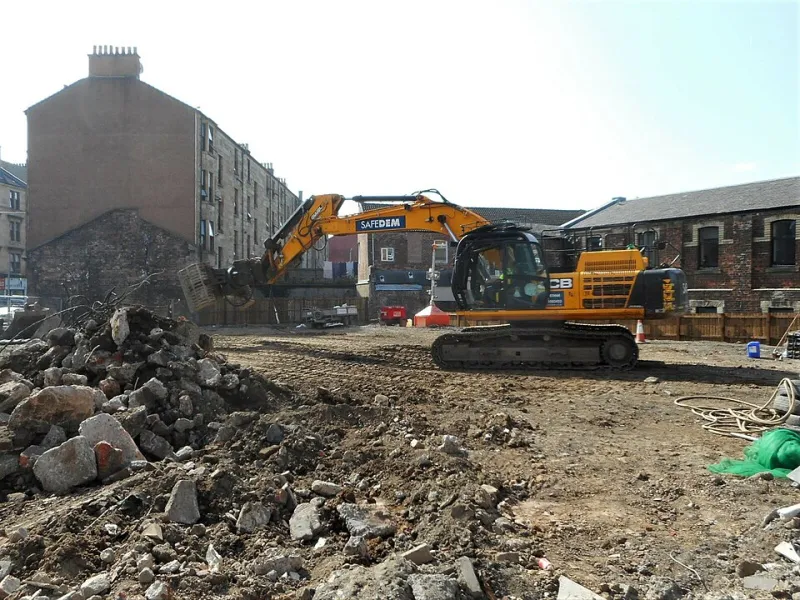
Photo by Photo by David Bayliss on Unsplash on Unsplash
On tight urban demolition sites, noise is rarely a purely technical matter. It is a programme issue, a neighbour-relations issue and, increasingly, a consent issue. A contractor that treats noise and vibration as matters to be managed after mobilisation may find that the local authority, rather than the developer, ends up setting the terms of the work. Section 61 of the Control of Pollution Act 1974 offers a route to agree those terms in advance. Used properly, it is not merely a regulatory box to tick; it is a mechanism for fixing working hours, methods and monitoring before the first hammer falls.
The consent before the complaint
Section 61 allows a person intending to carry out construction or demolition works to apply to the local authority for prior consent. The authority may grant consent subject to conditions, or refuse it. Those conditions can address working hours, the type and location of plant, noise and vibration limits, monitoring arrangements and the handling of complaints. The process is commonly described as Section 61 prior consent, and it sits alongside the local authority's power to serve a Section 60 notice where works are likely to cause nuisance.
That distinction matters for developers. A Section 60 notice is imposed on the site; a Section 61 consent is negotiated before the site opens. The former tends to arrive after complaints, inspections and correspondence. The latter gives the contractor an opportunity to explain the method, justify the hours and propose controls that reflect the actual demolition sequence. It also gives the local authority a documented basis for agreeing what is reasonable.
The governing principle is usually best practicable means. That phrase is not a licence to do the minimum. It requires the contractor to demonstrate that noise and vibration have been considered, that alternatives have been assessed and that the chosen method is appropriate for the location. A generic statement that the works will comply with BS 5228 is unlikely to satisfy that test on a constrained urban site.
Planning permission is not noise permission
Demolition can benefit from permitted development rights in certain circumstances, and planning conditions may already set hours or other controls. Neither point removes the need to consider Section 61. A planning permission or permitted development route is concerned with land use and the acceptability of development; it is not a substitute for environmental consent. Equally, a Section 61 consent does not override a planning condition. The two must be read together.
This is where early coordination pays. If a planning condition restricts working hours, the contractor's Section 61 application should reflect that restriction rather than propose something broader and hope for the best. If the local authority's environmental health team is likely to require monitoring, the developer should know before the tender is priced. If the site is close to residential windows, schools, hospitals or commercial premises sensitive to vibration, the method statement should say how those receptors will be protected. A consent that conflicts with the planning position creates avoidable risk for everyone.
What a tender-stage noise and vibration strategy should contain
It is reasonable for a developer to require a noise and vibration strategy as part of the tender return. The strategy should be specific to the site and the demolition method, not a recycled corporate document. At minimum, it should identify the sensitive receptors and the baseline conditions, set out the proposed demolition sequence and plant schedule, explain the hours of work, and describe the monitoring regime. It should also name the person responsible for environmental control and the complaint response procedure.
A credible strategy will refer to the relevant parts of BS 5228 and explain how noise and vibration will be managed in practice. For vibration, that means distinguishing between human response and the potential for structural damage, and setting trigger levels that reflect the receiving building. For noise, it means considering tonality, impulsiveness and the timing of particularly noisy activities, not just a single decibel figure. The strategy should also address how the contractor will adapt if monitoring shows that the controls are not working.
On a tight site, the tender should include a priced allowance for acoustic barriers, monitoring equipment, liaison and any method changes that are reasonably foreseeable. A bid that leaves these items as provisional sums or assumptions is not necessarily cheaper; it may simply move the cost to a variation once the local authority becomes involved.
The developer's role in keeping consent and delivery aligned
The developer does not need to become the noise consultant, but it does need to control the interface. That means deciding who will apply for Section 61 consent, who will hold it, and how the conditions will be flowed down to the demolition contractor and any subcontractors. It means checking that the programme allows time for the application to be prepared, discussed and determined. It also means ensuring that the consent conditions are reflected in the contract documents, rather than sitting in a separate file that no one reads after mobilisation.
In 2026, with urban regeneration continuing on constrained sites and local authority environmental health teams under pressure, a late approach to noise consent is a poor bet. The better course is to make Section 61 part of the pre-construction narrative: a consent that shapes the method, informs the tender and gives neighbours a clear point of contact. Noise will always be present on a demolition site. The question is whether it is managed by design or by complaint.