Ground Risk Before the First Hammer: A Pre-Demolition Checklist for Developers
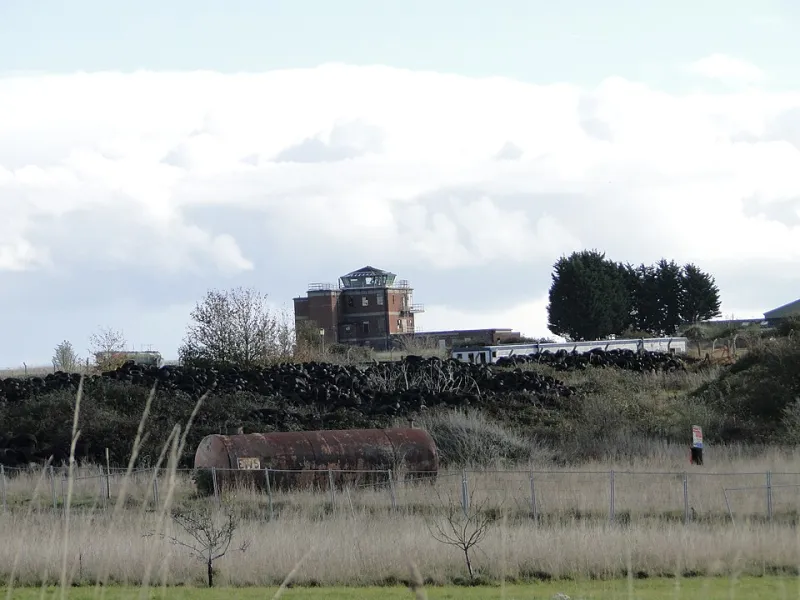
Photo: Adrian S Pye , CC BY-SA 2.0, via Wikimedia Commons
Demolition tenders are usually built around what can be seen: the frame, the roof, the cladding and the soft strip. The ground is often treated as a later problem. That is a mistake. On UK sites, the most disruptive discoveries frequently sit below the slab: fuel tanks, redundant foundations, contamination, live services and archaeology. Each can stop work, attract a regulator and turn a fixed price into a variation.
A commercial risk, not just a technical one
Below-ground risk is often left to the enabling works contractor or covered by a provisional sum. In a competitive tender, contractors price what they know and qualify what they do not. The result is either a risk allowance or an exclusion. Either way, the developer carries the uncertainty, and the programme carries the consequences.
Fuel tanks and associated pipework
Heating oil tanks, diesel tanks and older petrol installations are common on former industrial, commercial and agricultural sites. The tank itself may be redundant, but the pipework, bund and surrounding ground can still contain contamination. Removal may require specialist contractor involvement and validation sampling. If the tank is discovered after demolition has started, the programme can be held while the appropriate permits, waste classification and disposal route are arranged.
Redundant foundations and voids
Mass concrete foundations, pile caps, basements, vaults and culverts can obstruct excavation or create collapse risks. They may also affect the choice of demolition method and the design of temporary works. A desk study will not always reveal them. Trial pits and targeted investigation are more reliable, particularly where historical buildings have been altered or extended over time.
Contamination and waste classification
Made ground, former industrial uses and demolition arisings can contain heavy metals, hydrocarbons, asbestos or other contaminants. Contamination affects waste classification, disposal costs, reuse options and, in some cases, the need for remediation and regulatory agreement. If contaminated material is encountered unexpectedly, work may stop while sampling and assessment are carried out. The earlier the ground is characterised, the more control the developer has over cost and programme.
Buried services
Live gas, electricity, water, telecoms and drainage services are a safety risk and a programme risk. Service searches and tracing should be completed before demolition, not after the first strike. CCTV drainage surveys can reveal culverts, connections and unmapped runs. Isolation and diversion need to be coordinated with the utility providers and built into the demolition sequence.
Archaeology and unexploded ordnance
Archaeology is a planning risk as well as a ground risk. Desk-based assessment and, where appropriate, geophysics or trial trenching should be completed before demolition if the site is in an area of archaeological interest. Unexploded ordnance risk should also be assessed through a desk study, particularly on sites with a history of industrial or military use. A watching brief or UXO specialist may be needed during groundworks.
A pre-demolition checklist
Before the demolition tender is invited, the developer should be able to answer the following:
- Has a desk study and historical mapping review been completed?
- Have utility searches, service tracing and drainage CCTV been commissioned?
- Has ground investigation been carried out to the depth of the proposed works?
- Has asbestos in soil been considered where made ground will be disturbed?
- Have fuel tanks, pipework and associated contamination been investigated?
- Has archaeology been assessed and any planning condition addressed?
- Has a UXO desk study been completed?
- Has the demolition contractor had the opportunity to review the findings?
How discoveries reshape the programme
A below-ground discovery rarely affects only the ground. It can trigger a stop notice from the Environment Agency or local authority, require a revised waste classification, delay the removal of a tank, or force a change to the demolition sequence. On a tight urban site, even a short stoppage can affect crane bookings, waste movements and the handover date. Early investigation adds cost at the front end, but it gives the developer evidence to price, programme and procure with greater certainty.
Procuring the investigation
Appoint a competent geo-environmental consultant and scope the investigation to the demolition depths, not just the future foundation level. Share the findings with the demolition contractor in the tender pack and require the contractor to state its assumptions. Avoid transferring an unquantified ground risk to a contractor who has had no opportunity to price it; that risk usually returns as a claim.
In 2026, the lesson for developers is simple. The structure above ground tells you what will come down. The ground below tells you what might stop the job. Investigate it before the first hammer falls.