Reuse Before Removal: Making the Pre-Demolition Audit Pay
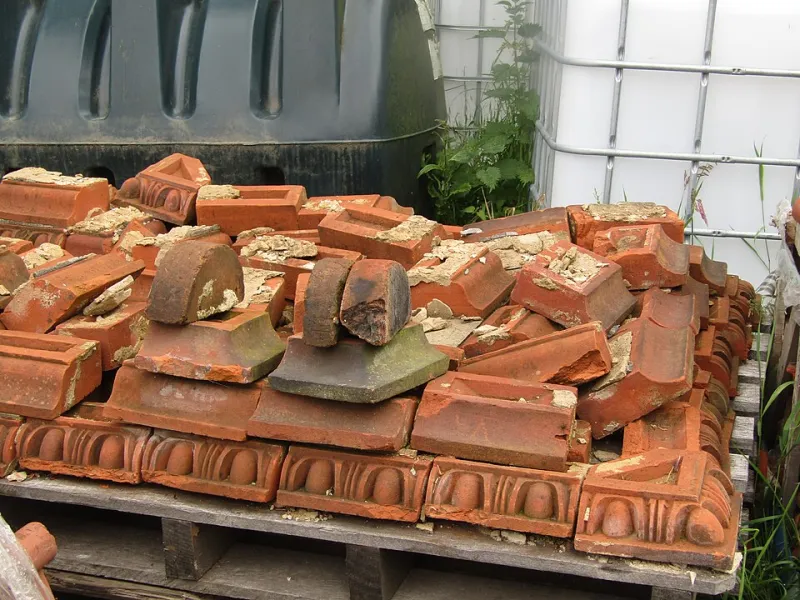
Photo: Kolforn (Kolforn) I'd appreciate if you could mail me ([email protected]) if you want to use this picture out of the Wikimedia project scope. This file is licensed under the Creative Commons Attribution-Share Alike 4.0 International license. Yo
Ask a developer what a building is worth and the answer will usually describe its consented floor area, its rental tone or its exit yield. Ask what the building is worth in pieces, and the conversation tends to falter. Yet on a typical urban refurbishment or redevelopment, the existing structure contains steel, brick, stone, slate, timber and mechanical plant that would cost real money to buy new and real money to throw away. The audit is the document that reconciles the two.
The audit is a commercial instrument, not a formality
A pre-demolition audit is a systematic survey of a building's fabric carried out before works begin, recording material types, quantities, condition and the most appropriate route for each. Best practice guidance from BRE and WRAP, together with the Institution of Civil Engineers' Demolition Protocol, sets out a method that is now widely recognised by local authorities and warranty providers.
Too often the audit is commissioned late, scoped narrowly or treated as a box-ticking annex to a waste plan. That is a procurement failure rather than a technical one. Commissioned eight to twelve weeks ahead of the start on site, and written to a specification the contractor must work to, the audit becomes the basis for pricing, for planning evidence and for the reuse strategy itself.
What a defensible audit actually contains
The foundation is a refurbishment and demolition asbestos survey, without which no meaningful material schedule can be produced. From there, the audit should break the building down by element — substructure, frame, envelope, internal finishes, services — and record for each: quantity by weight and volume, condition and contamination, presence of hazardous substances or invasive species, and the practical difficulty of recovery given access and programme.
Crucially, each line needs a destination, ranked against the waste hierarchy: reuse on the same site, transfer to a donor site, resale through a salvage partner, recycling, energy recovery, disposal. An audit that stops at tonnage tells a developer nothing about value. One that assigns a route to every material stream tells them what to instruct, what to store and what to sell.
The arithmetic developers usually get wrong
The disposal side of the ledger is familiar: landfill tax, which rises annually, gate fees, haulage, skip hire and the administrative overhead of transfer notes. The reuse side is less often quantified, and it has three components — avoided disposal cost, avoided purchase of primary material, and any resale or credit income.
On most schemes the first two do the work. Reclaimed brick, stone flags, slates and structural steel are frequently cheaper to recover and re-lay than to specify new, particularly where planning or conservation requirements favour like-for-like repair. Steel deserves particular attention: the SCI's protocol for reusing structural steel, with appropriate sampling and testing, allows members to be returned to structural duty rather than downcycled, and the carbon saving is substantial.
Salvage income is the least reliable element and should be modelled conservatively. Architectural salvage dealers will pay for the right stock, but storage, double handling and security all consume margin. The honest conclusion for most developers is that reuse is a cost-avoidance strategy with a carbon dividend, not a profit centre.
Donor sites and the logistics of keeping things
The most underused mechanism is the donor site arrangement: matching materials released by one scheme to demand elsewhere in the same portfolio. Paving, kerbs, railings, structural steel, raised access floors and even mechanical plant can transfer between projects where specification and programme allow.
The obstacle is rarely willingness; it is logistics. Recovered material occupies space that the programme wants, and a pallet of brick left unprotected for six months will be a pallet of rubble. Successful arrangements identify the receiving site and its storage capacity before demolition begins, agree ownership and insurance, and record quantities as they leave. Where no internal destination exists, salvage platforms and dealers should be engaged early enough to remove material on a schedule that suits the works.
Obligations and the evidence trail
The waste hierarchy is embedded in English waste policy and in the duty of care under section 34 of the Environmental Protection Act 1990. Site waste management plans have not been mandatory in England since 2013, but planning authorities, funders and certification schemes routinely ask for equivalent evidence. BREEAM's construction waste and recycled aggregate credits, whole-life carbon assessments and the circular economy statements now expected on larger London schemes all depend on data that only a pre-demolition audit can supply.
Non-negotiable: registered waste carriers, waste transfer notes for every movement, consignment notes for hazardous waste, and a photographic record of material leaving site. Without that trail, a reuse claim is an assertion rather than a fact.
Briefing the contractor: five clauses that change behaviour
First, make the audit a pre-commencement deliverable with a hold point — no demolition until it is signed off. Second, require a salvage register updated weekly with weights and photographs. Third, agree explicitly how any resale proceeds are treated, whether as a credit against the contract sum or shared. Fourth, set reuse targets in tonnes rather than percentages and require transfer notes as proof. Fifth, name a materials champion within the contractor's team and review performance monthly.
Where the value lands
Reuse does not happen because a contractor is well intentioned. It happens because the specification asked for it, the programme allowed for it and someone was accountable for it. A developer who briefs the audit properly, before the tender rather than after, buys themselves a cheaper disposal bill, a stronger planning submission and a defensible carbon story. The building was always worth something in pieces. The audit is how that value is captured.