Measured Air, Not Assumed Air: Specifying Dust Control in the Demolition Tender
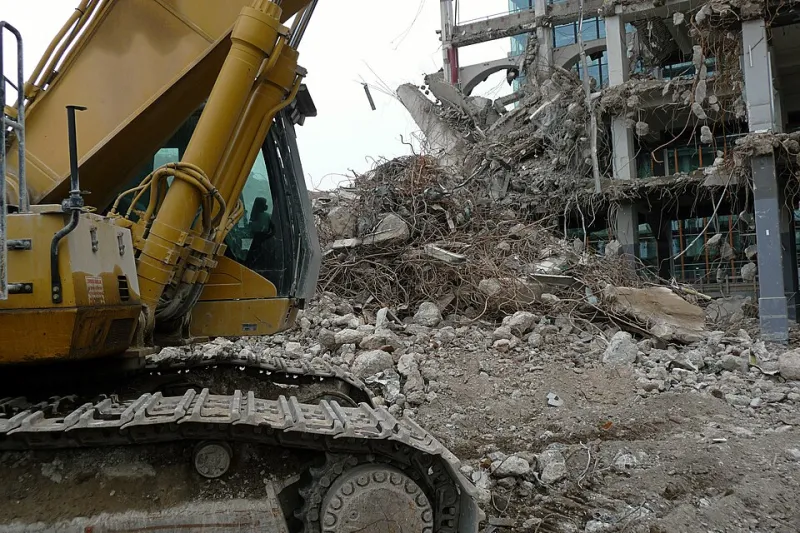
Photo: Fons Heijnsbroek from Amsterdam, Netherlands, CC0, via Wikimedia Commons
Demolition dust is frequently discussed as a nuisance. In dense urban schemes it is also a compliance and programme risk. The visible plume from a breaker attracts attention; the finer fraction that travels further and settles indoors attracts complaints and, occasionally, enforcement. For developers, the question is less whether a contractor owns a bowser and more whether the tender has priced, programmed and evidenced the controls the site actually requires.
A tender line, not a paragraph in the method statement
Dust control often appears in a method statement as a list of good intentions: water sprays, wheel washes, damping down and daily cleaning. Those measures may be appropriate, but if they are not identified as priced items they are difficult to manage when the programme tightens. A dedicated dust and air-quality section in the tender schedule gives the developer a basis for comparison. It also gives the contractor a clear signal that the controls will be measured, not assumed.
The section need not be elaborate. It should identify the principal dust-generating activities, the receptors affected, the controls proposed, the water source, the monitoring regime and the complaint-response process. Where the works are phased, the tender should say how controls change between soft strip, structural demolition and ground works. A single line for dust suppression across a twelve-month programme is rarely credible.
The dust risk assessment should lead the scope
A site-specific dust risk assessment is the foundation. Generic assessments copied from another project tend to miss the receptor that matters: the school on the opposite side of the road, the residential balconies above the hoarding, the hospital ventilation intake or the neighbouring workshop with open windows. The assessment should connect activities to receptors and set out controls proportionate to the risk.
Developers should ask for the assessment with the tender return, not after appointment. It should reflect planning conditions, any air-quality constraints in the consented scheme and the relevant industry guidance on dust from demolition and construction. If the assessment cannot explain why a particular control is proposed, it is unlikely to survive scrutiny when a complaint arrives.
Water is a permission, not a tap
Many urban demolition sites have no permanent water supply at the point of strip-out. Contractors may rely on a standpipe licence from the local water company, a hydrant permit, bowser deliveries or a temporary mains connection. Each route has lead times. Each has limitations on volume, access and storage. The tender should require the contractor to name the intended source, the backup arrangement and the evidence that permission has been sought.
This matters because dust suppression is water-intensive during peak demolition. A site that assumes a standpipe will be available on day one may find itself damping down with a single bowser while the application is processed. Developers should also ask about storage capacity, refill routes, frost protection in winter and the management of runoff. Water leaving site as slurry is another environmental issue, and it should not be discovered after the first downpour.
Monitoring that produces evidence
Visual inspection remains the backbone of dust control. A competent site team can see when cutting, breaking or loading is generating more dust than usual and can adjust the method. But visual inspection alone is difficult to defend when a neighbour complains or a regulator asks for records. Real-time particulate monitoring can provide a useful record, provided the equipment is appropriate, calibrated and positioned with a clear purpose.
The tender should ask for a monitoring plan rather than a brand name. The plan should explain what is monitored, where, how often and against what trigger levels. It should state who reviews the data, how exceedances are investigated and how records are retained. For smaller sites, a simpler regime of documented visual checks, weather records and photographic evidence may be proportionate. The important point is that the regime is specified before work starts, not invented in response to a complaint.
Complaints need a process with timescales
Complaint response is a dust control. A telephone number on the hoarding is not a process. The tender should require a named contact, a logging system, an acknowledgement timescale, an investigation method and a close-out record. Where complaints are likely, a neighbour liaison arrangement can reduce friction by giving residents a route to raise concerns before they escalate.
Developers should also consider how complaint data will be reported. A monthly summary of complaints, causes and corrective actions gives the project team a feedback loop. If the same issue recurs, the control regime needs to change. That is easier to require when the obligation sits in the contract rather than in a site induction briefing.
The pre-start evidence pack
A practical way to make dust control a deliverable is to require a pre-start evidence pack. This might include the site-specific dust risk assessment, the monitoring plan, confirmation of the water source and permissions, calibration certificates for monitoring equipment, the complaint-response procedure and training records for relevant staff. The contract can make submission of the pack a condition of commencing dust-generating works.
This approach does not remove the need for good site practice. It simply ensures that the developer has something to inspect before the first breaker starts, rather than relying on assurances given during tender clarification. On tight urban sites, where the margin for error is small, that evidence is worth more than another paragraph in a method statement.
Conclusion
Air-quality planning for demolition should be visible in the tender, priced in the schedule and evidenced before work starts. Developers who specify the assessment, the water arrangements, the monitoring regime and the complaint process give themselves a clearer basis for comparing bids and a firmer position if performance slips. Dust may be difficult to see, but the controls should not be difficult to find.