The Railway's Veto: Sequencing Lineside Demolition Before the Programme Hardens
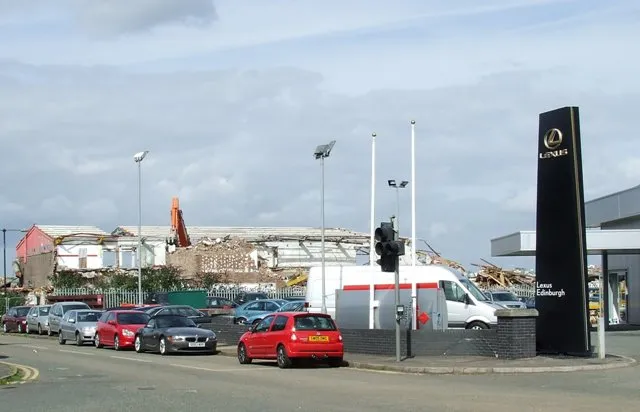
Photo: Thomas Nugent, CC BY-SA 2.0, via Wikimedia Commons
Lineside demolition is often described as a technical challenge. In practice, it is a sequencing challenge. The building may be ordinary, the demolition method may be well understood, and the contractor may be competent, yet the programme can still fail because the railway's consent, asset protection and possession requirements were treated as later-stage details rather than early design inputs.
For developers, the commercial lesson is straightforward. A site boundary shared with an operational railway is not simply a neighbouring constraint. It is a veto held by an asset owner with its own safety regime, access rules and operational timetable. The earlier that reality is built into the programme, the less likely it is that a consented scheme, a tendered price or a fixed start date will have to be unpicked.
The railway is an asset owner, not a neighbour
A developer looking at a lineside site will usually see clearance, access and perhaps a boundary wall. Network Rail will see track, signalling, overhead line equipment, cables, drainage, structures and the safe operation of passenger and freight services. Those assets do not respond well to assumptions made at feasibility stage.
Early work should therefore establish the railway boundary precisely, identify the assets that could be affected and confirm what physical separation exists between the demolition zone and operational infrastructure. This is not a desk exercise alone. A walkover with the contractor and, where appropriate, early contact with the railway's asset protection team will reveal whether scaffolding, hoarding, crane positions or temporary works will encroach on railway land or influence railway assets.
If the answer is yes, the project has moved from a general demolition exercise into an asset protection exercise. That distinction should be recorded before the tender is issued.
Possession is a date, not a promise
Some lineside demolition can proceed without track closures. Much cannot. Where works require a possession, the programme must be built around a window that is scarce, booked well in advance and subject to operational change. A possession is not a flexible allowance in a contractor's programme. It is a fixed opportunity with a narrow duration and strict entry and exit conditions.
This has two consequences. First, the demolition method must be compatible with the possession window. If a crane lift, protection screen installation or structural removal cannot be completed and made safe within the available hours, the method needs reconsidering. Second, the procurement route must respect the possession date. Tender periods, contractor mobilisation, temporary works design and safety-critical approvals all need to sit ahead of that date, not behind it.
In 2026, possession availability remains one of the principal determinants of lineside programme certainty. Developers should ask for the possession strategy in outline at tender stage, not after the contract is awarded. A contractor who can explain how the work will be delivered within the railway's access regime is worth more than one who offers a lower price based on unrestricted working.
Vibration, settlement and the ground between
Live railway infrastructure is sensitive to ground movement. Demolition of foundations, basement walls, retaining structures and hardstanding can change the loads and conditions around railway assets. Vibration from breaking, crushing or heavy plant movement may also be a concern, particularly where the separation distance is small.
A credible lineside approach includes a baseline condition survey, agreed monitoring arrangements and trigger values that are understood by all parties. The contractor should be able to explain how demolition methods will limit ground disturbance and how excavation or temporary works adjacent to the railway will be supported. This is not simply a matter for the contractor's method statement. It should be visible in the developer's pre-construction information and reflected in the tender documents.
Where the railway's requirements impose monitoring or protection measures, those measures need to be priced and programmed. A late instruction to install additional instrumentation or revise a demolition sequence can erode both budget and float.
The vertical constraint: cranes and oversail
Cranes introduce a separate dimension because they operate above the site boundary. A crane that oversails railway land or operational infrastructure will require agreement and a level of planning that goes well beyond a standard lift plan. The railway's requirements may rule out oversail altogether, or may permit it only under specific controls, exclusion zones and supervision arrangements.
This is a design-stage issue, not a tender-stage afterthought. If the preferred demolition method depends on a large crane positioned close to the boundary, the project should test that assumption early. Alternatives may include smaller plant, remote demolition techniques, revised phasing or a different temporary works arrangement. Each alternative has cost and programme implications. The earlier they are tested, the more room remains to absorb them.
Overhead line equipment adds further sensitivity. Clearance, isolation and protection requirements can influence the height and position of plant, the use of protection screens and the timing of work. These are not details that can be left to the contractor's first site meeting.
Temporary works evidence must be tender-ready
The railway will expect evidence that temporary works have been designed, checked and can be safely constructed and removed. Developers do not need to produce that evidence themselves, but they should require it to be described clearly in tender returns. That means temporary works design responsibility, independent checking arrangements, drawings and calculations, monitoring proposals and the interface with the possession plan.
A tender that treats temporary works as a provisional item, or that cannot explain how rail asset protection will be managed, is a warning sign. The same applies to contractors who cannot demonstrate experience of working within railway boundaries or who propose to rely on generic method statements.
Build the programme backwards from the railway
The most reliable lineside programmes are developed backwards from the railway's constraints. The possession date, asset protection agreement, survey requirements, temporary works approvals and safety-critical permits form the spine of the programme. Demolition activity is then arranged around that spine.
This approach should begin before the planning application is finalised where possible. Early feasibility work can identify whether the scheme's access, crane strategy, basement depth or phasing is fundamentally incompatible with the railway's requirements. If it is, the developer has time to redesign. If the issue emerges after tender, the redesign is likely to be costly and the programme is likely to be lost.
Lineside demolition can be delivered safely and predictably. It rarely rewards optimism about railway consents. The developer's best protection is to treat the railway as a primary programme constraint, require evidence of rail experience at tender and keep possession dates at the centre of the demolition strategy rather than at its edge.